
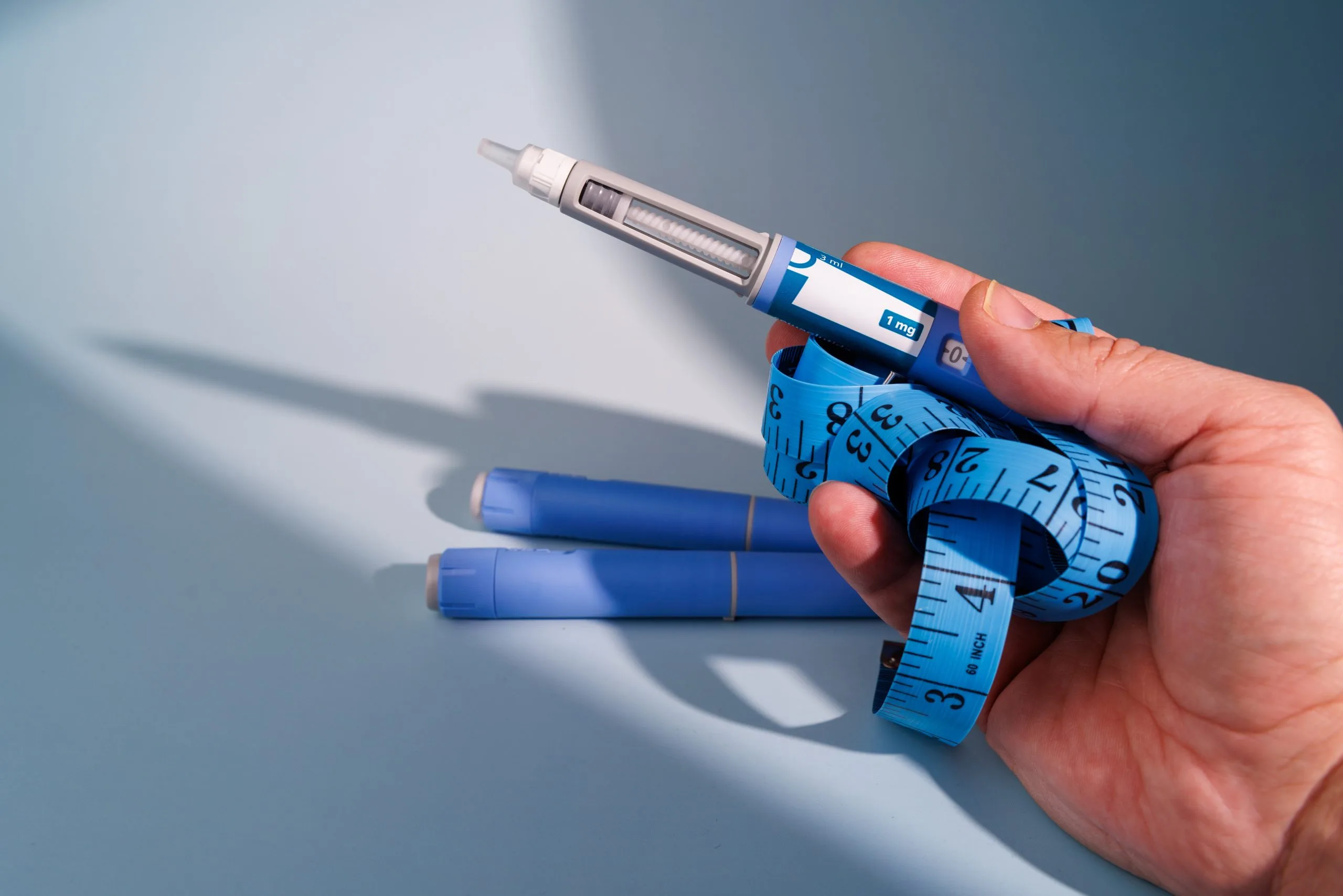
Both semaglutide and tirzepatide are injectable GLP-1 medications that lower appetite and slow digestion, but tirzepatide works on two hormone pathways instead of one and has produced larger average weight loss in clinical research. That does not automatically make it the right choice for you. The medication that fits your body, your health history, and how you tolerate side effects is the one that produces lasting results.
At our wellness center in Marlboro, NJ, both medications are prescribed inside a supervised medical weight loss program – with lab work, follow-up visits, and adjustments along the way. Below is a plain-language breakdown of how the two compare.
Semaglutide came first. It is a GLP-1 receptor agonist, meaning it mimics a natural gut hormone called glucagon-like peptide-1. It was originally developed for type 2 diabetes, and researchers quickly noticed that patients were also losing significant weight.
Semaglutide: Marketed under brand names like Ozempic® and Wegovy®, it is widely recognized for helping patients achieve significant, sustained weight loss.
Tirzepatide: Known by brand names Mounjaro® and Zepbound®, it is a dual agonist that activates GLP-1 receptors and GIP (glucose-dependent insulinotropic polypeptide) receptors. Hitting two pathways appears to give it an edge on appetite control and blood sugar handling.
Both are given as a once-weekly subcutaneous injection, usually in the abdomen, thigh, or back of the arm. Both are prescription-only and require medical oversight, and both are now approved for chronic weight management in people with or without diabetes.
Both medications change the conversation between your gut and your brain.
Appetite signaling. They act on the hypothalamus, the part of the brain that regulates hunger. Patients often describe the effect as “food noise turning off” – constant snack thoughts quiet down.
Slower gastric emptying. Food stays in your stomach longer, so you feel full sooner and stay full longer. Portion sizes shrink naturally instead of through willpower alone.
Better blood sugar control. Both prompt the pancreas to release insulin when blood sugar is high and reduce glucagon, helping prevent the crashes that trigger cravings.
Tirzepatide’s added GIP activity may amplify insulin sensitivity, appetite suppression, and overall energy metabolism, and some researchers believe it influences how fat tissue stores energy. That dual mechanism is the core difference in any honest discussion of semaglutide vs. tirzepatide for weight loss.
Both medications work well. On average, tirzepatide works somewhat better.
In real practice, patients on semaglutide commonly see meaningful weight loss over 6 to 12 months when the medication is paired with adequate protein intake, strength training, and consistent follow-up. Tirzepatide patients often reach a similar amount of loss faster, or reach a higher total.
But averages hide individual variation. Some patients respond beautifully to semaglutide and plateau on tirzepatide. Others are the reverse. Factors that shift the outcome include:
Baseline insulin resistance
Thyroid and sex hormone status
Sleep quality and chronic stress
Muscle mass and daily activity
Medication adherence and dose escalation tolerance
Hidden inflammation from food sensitivities
The STEP trials for semaglutide showed roughly 15% average body weight reduction at 68 weeks in participants without diabetes.
The SURMOUNT trials for tirzepatide at 72 weeks showed larger reductions, with the highest dose group averaging nearly 21%.
A direct head-to-head comparison in adults with type 2 diabetes found tirzepatide produced greater reductions in both A1C and body weight than semaglutide. Retrospective analyses of real-world patients confirm this observation.
The takeaway is not “tirzepatide wins.” It is that tirzepatide has a higher ceiling, while semaglutide remains highly effective and, for many patients, easier to tolerate at lower doses.
The side effect profiles are very similar because the mechanisms overlap.
Most common:
Nausea
Vomiting
Constipation or diarrhea
Abdominal pain
Burping and reflux
Fatigue during dose increases
Reduced appetite to the point of skipping meals
Most of these are mild to moderate, dose-dependent, and fade as your body adapts. They are also largely preventable with a slow titration schedule – which is exactly why self-directed or unsupervised use tends to go badly.
Important safety notes. Neither medication is appropriate if you have a personal or family history of medullary thyroid carcinoma or MEN2 syndrome. Both require caution with a history of pancreatitis, gallbladder disease, or severe gastroparesis. Neither is used during pregnancy or while trying to conceive. Rapid weight loss without enough protein and resistance training means you lose lean tissue along with fat, which slows metabolism long-term. This is a major reason we monitor patients rather than just refill prescriptions.
Patients transitioning to or from other GLP-1 medications need clearance before starting.
Both follow a “start low, go slow” schedule with a once-weekly at-home injection on the same day each week.
Semaglutide typically begins at a low weekly dose and increases in steps roughly every four weeks, based on tolerance and results – not on a fixed calendar.
Tirzepatide also starts low and steps up gradually. Many patients hold at a mid-range dose for months because it is working and side effects are minimal. There is no prize for reaching the maximum dose.
Our team provides thorough training on proper injection technique and stays available for questions throughout your program. Practical tips that make a real difference:
Rotate injection sites to reduce irritation.
Eat protein first at every meal – before carbohydrates.
Hydrate deliberately. Reduced thirst signaling is common.
Add fiber and magnesium if constipation appears.
Do not skip strength training. Two to three sessions weekly protect muscle.
Report side effects early so we can adjust rather than pause.
When patients ask about semaglutide vs. tirzepatide for weight loss, the decision usually comes down to a handful of factors:
Your starting point and goal. Larger goals may favor tirzepatide’s higher ceiling.
Metabolic profile. Significant insulin resistance often responds well to the dual-pathway approach.
Tolerance history. If you have had rough nausea with GLP-1s before, a slower semaglutide plan may be smarter.
Formulation sensitivities. Some patients have sensitivities to inactive ingredients in a specific formula; for example, our compounded tirzepatide is formulated with niacinamide to reduce side effects and is free of the preservative benzyl alcohol.
Availability and supply. Access shifts over time, and flexibility matters.
Your free medical weight loss consultation includes a detailed medical history review, a discussion of your goals and past experiences, an assessment of lifestyle and dietary habits, and any necessary lab work to map your metabolic health.
A GLP-1 is a tool, not a program. What keeps weight off is fixing the reasons it accumulated.
Our functional medicine approach looks at thyroid function, cortisol patterns, micronutrient status, gut health, and hormone balance. Food sensitivity testing identifies inflammatory triggers that can stall progress even on medication.
Because your caloric intake drops on these medications, supportive therapies help protect energy and nutrient levels. Depending on your labs, your plan may also include:
Micronutrient testing on program
Hormone support
That combination is what turns short-term loss into a maintained result.
Semaglutide and tirzepatide both quiet appetite, slow digestion, and improve blood sugar control. Tirzepatide adds a second hormone pathway and has shown greater average weight loss in trials, while semaglutide remains a strong, well-studied option – sometimes with easier tolerance. The right choice depends on your labs, your history, and how your body responds.

Advanced Wellness Aesthetics
August 3, 2026

Tiffany Matragas